
How to Price a Digital Product in India: ₹99, ₹499 or ₹1,999?
Price too low and you feel underpaid; too high and you worry nobody will buy. Here's a simple way to price ebooks, templates and courses for Indian buyers, with real price bands and the maths.
"What should I charge?" is the question that stops more product launches than any other. Price too low and you feel underpaid. Price too high and you worry nobody will buy.
There's no perfect number, but there is a sensible way to choose one. This guide walks you through it with Indian price points and real maths.
Start with the outcome, not the effort
Buyers don't pay for how long something took you to make. They pay for the result it gives them.
A 12-page template pack that saves a small business owner five hours a week is worth far more than its page count suggests. A 40-hour course that only covers basics might be worth less than you think.
Ask yourself:
- What problem does this solve?
- How much time, money or stress does it save?
- What would the buyer otherwise spend to solve it (a consultant, an agency, trial and error)?
Your price should be a small fraction of the value the buyer gets.
The three price bands in India
Most digital products sold by Indian creators fall into one of three bands:
| Band | Typical price | Good for | How buyers decide |
|---|---|---|---|
| Impulse | ₹49–₹299 | Checklists, templates, recipe cards, short guides | Quickly, often from a single reel |
| Considered | ₹499–₹1,999 | Template packs, mini-courses, recorded workshops | After seeing a few posts or a lead magnet |
| Premium | ₹2,000 and above | Full courses, cohorts, coaching, 1:1 calls | After trust is built, often after a conversation |
If this is your first product, start in the impulse or considered band. It's easier to get your first 20 buyers, collect testimonials and learn what people really want.
Use anchors and options
People judge prices by comparison. You can use that honestly:
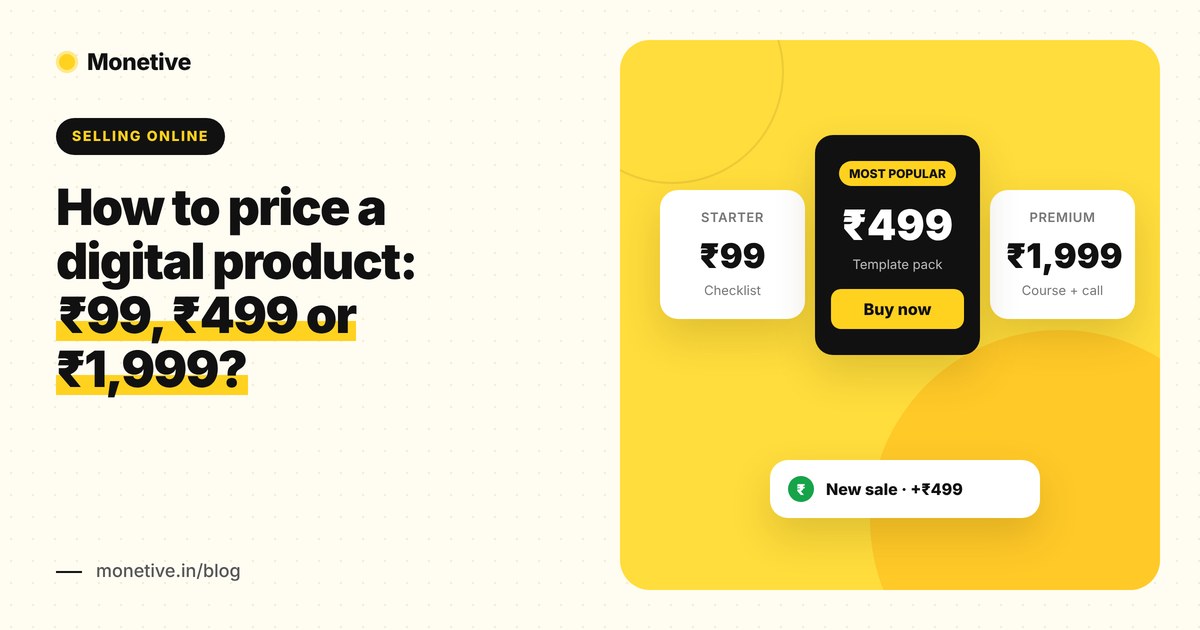
Offer three options. For example: ₹199 for the templates, ₹499 for templates plus a video walkthrough, ₹1,999 with a 30-minute review call. Most people pick the middle option, and some choose the premium one you'd never have sold on its own.
Show the real value. "Includes 12 templates (₹99 each if sold separately)" helps buyers understand what they're getting, as long as it's true.
Bundle related products. Two products at ₹299 each can sell well as a ₹449 bundle.
Charm prices: ₹499 or ₹500?
Prices ending in 9 (₹99, ₹499, ₹999) are common in India and buyers are used to them. They do tend to feel cheaper than the round number. For premium offers, round prices (₹5,000, ₹15,000) can feel more confident. Either is fine; pick one style and stay consistent.
Launch pricing (done honestly)
An early-bird price is a great way to reward your first buyers and create a reason to act now:
- Set a launch price and a real end date, such as "₹299 until Sunday, then ₹499".
- Actually raise the price when the date passes.
- Don't run fake countdowns or "only 3 left" messages for digital products. Your audience notices, and it damages trust.
Know your take-home amount
Before you settle on a price, check what reaches your bank account after fees. For example, on a ₹499 sale:
| Amount | |
|---|---|
| Sale price | ₹499 |
| Platform fee (example: 10% on a free plan) | ₹49.90 |
| You receive (before any GST you owe) | ₹449.10 |
As you sell more, a paid plan with a lower fee per sale can save you money. Our Monetive vs SuperProfile comparison shows the maths at different sales levels, and pricing has the current plan details. If you're GST registered, remember to account for the tax as well. See GST for creators in India.
When to raise your price
Your price isn't fixed forever. Consider raising it when:
- Buyers say "this is so cheap for what it is"
- You've collected strong testimonials and reviews
- You've added more content or support
- Your conversion rate is high and steady
Raise in steps (₹299 → ₹399 → ₹499) and watch what happens to sales. If revenue goes up, keep going. Existing buyers should keep what they paid for.
Common pricing mistakes
- Pricing based on what you'd pay. Your audience may value it much more than you do.
- Discounting all the time. Constant sales teach people to wait.
- Too many options. Two or three choices help. Seven confuse.
- Promising results you can't guarantee. Describe what's included and who it's for. Avoid "guaranteed income" or "guaranteed followers" claims.
FAQ
What's a good price for my first ebook in India?
Most first ebooks and guides sell well between ₹99 and ₹499. Start there, collect feedback, then adjust.
Should I offer my first product for free?
Give away a small lead magnet for free, but charge for your main product, even if it's a modest price. Paying customers give better feedback and testimonials.
Can I change the price after launching?
Yes. You can update the price on your payment page at any time. Buyers who already paid keep their access.
Should I show the price in my reels?
It helps filter serious buyers. Many creators mention a starting price ("from ₹299") and share the full details in the DM or on the payment page.